
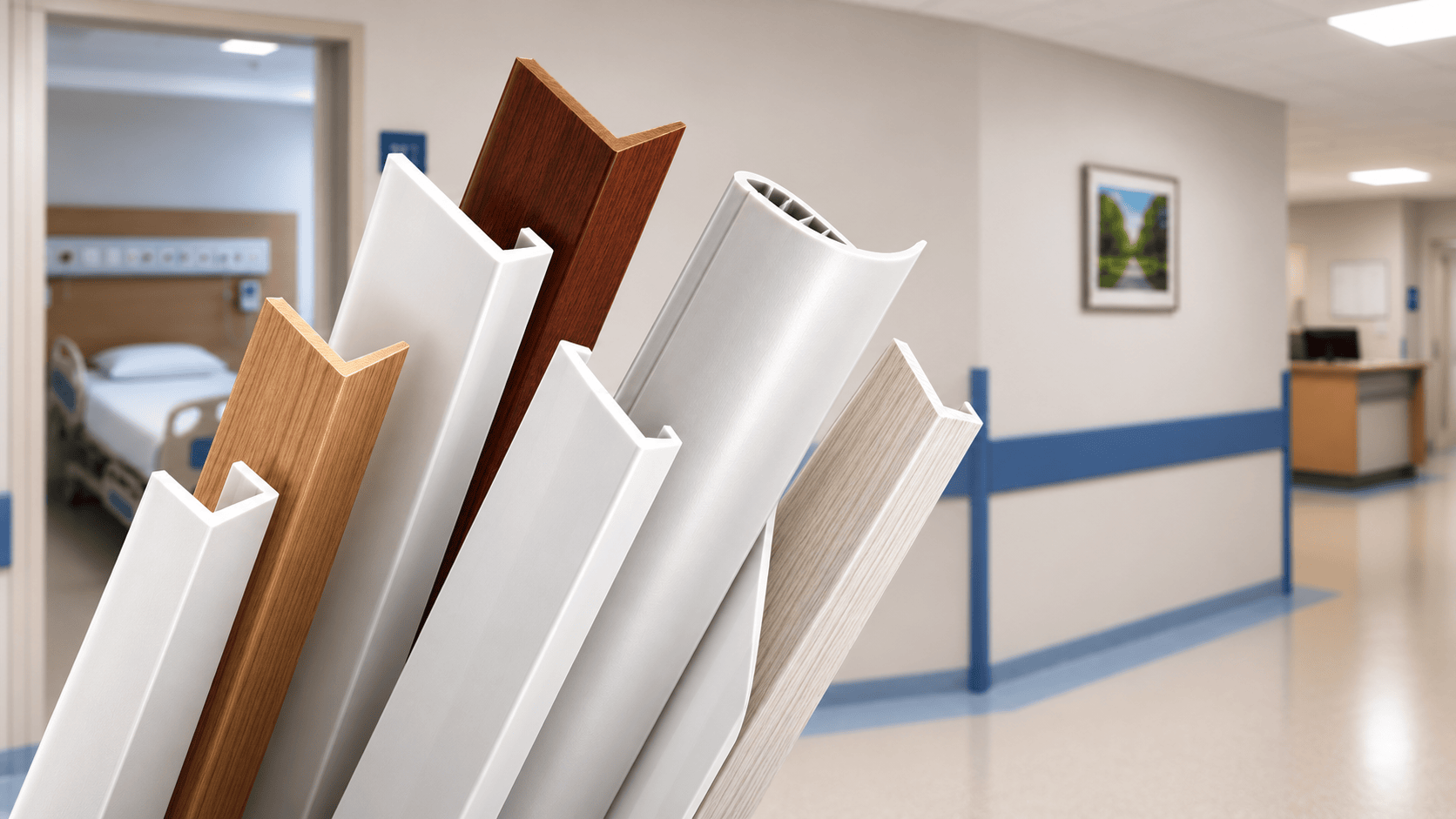
Whenever someone asks “what is the best PVC profile?”, the answer is: it depends on the application.
There is no one-size-fits-all profile. Each solution meets different needs, taking into account factors such as environment, function, exposure level, finish and technical requirements.
A corner protection profile, for example, has different requirements from a solution for refrigeration, retail or healthcare environments.
That is why the choice should go beyond shape or size. Before specifying a PVC profile, it is important to understand where it will be installed, what it needs to solve and what conditions it will have to withstand.
In this guide, you will learn the main criteria for choosing the most suitable solution for each application.
How to choose a PVC profile
Comparing PVC profiles by shape or material alone can lead to the wrong choice. Each application calls for a specific solution, defined by the conditions of the project.
So, before choosing a profile, evaluate five key points: environment, function, exposure level, finish and technical requirements.
Criterion | Key question | Example of impact |
Environment | Where will the profile be installed? | Walk-in cold room vs. sun-exposed façade |
Function | What does it need to do? | Impact protection vs. sealing vs. organizing |
Exposure level | How much will it be demanded in daily use? | Hospital corridor vs. decorative application |
Finish | Will it be visible? | Label holder vs. concealed technical profile |
Technical requirement | Is there a requirement that is not visible “to the naked eye”? | Resistance to disinfectants, slip resistance |
1 - Environment
The environment has a direct influence on the choice of PVC profile. Besides defining whether the application will be indoors or outdoors, you need to consider humidity, temperature, sun exposure, chemicals, cleaning frequency and traffic intensity.
A profile for a hospital environment, for example, will be subject to different conditions than a solution for a cold room, a façade or an industrial facility. That is why you should evaluate the conditions the product will be exposed to on a daily basis.
2 - Function
After evaluating the environment, it is important to define what the profile needs to do. Depending on the application, it can protect corners and walls, provide finishes and transitions, increase safety on stairs and ramps, seal doors, organize products, integrate equipment components or meet specific manufacturing needs.
Profiles that look alike can perform different functions, so shape should not be the only criterion considered.
3 - Exposure level
In addition to the environment, consider the profile’s exposure level during use. Frequent impacts, friction, humidity, temperature variations, constant cleaning and heavy traffic can increase wear.
Exposure level | Example environments | Specification note |
Low | Decorative setting, low traffic | Finish is the priority |
Medium | Offices, low-traffic stores | Moderate resistance |
High | Hospital corridor, industry, high-volume checkout | High mechanical resistance, technical validation |
A profile installed in a hospital corridor, for example, will be more exposed to impacts from stretchers, carts and equipment than a mainly decorative application.
4 - Finish
Not every profile needs to handle heavy impacts. In many applications, its role is to protect edges, create transitions between materials or provide a more uniform finish.
That s why the specification should consider factors such as cladding thickness, edge size, surface shape, installation method and compatibility with materials. In projects where the profile is visible, color and finish should also be considered.
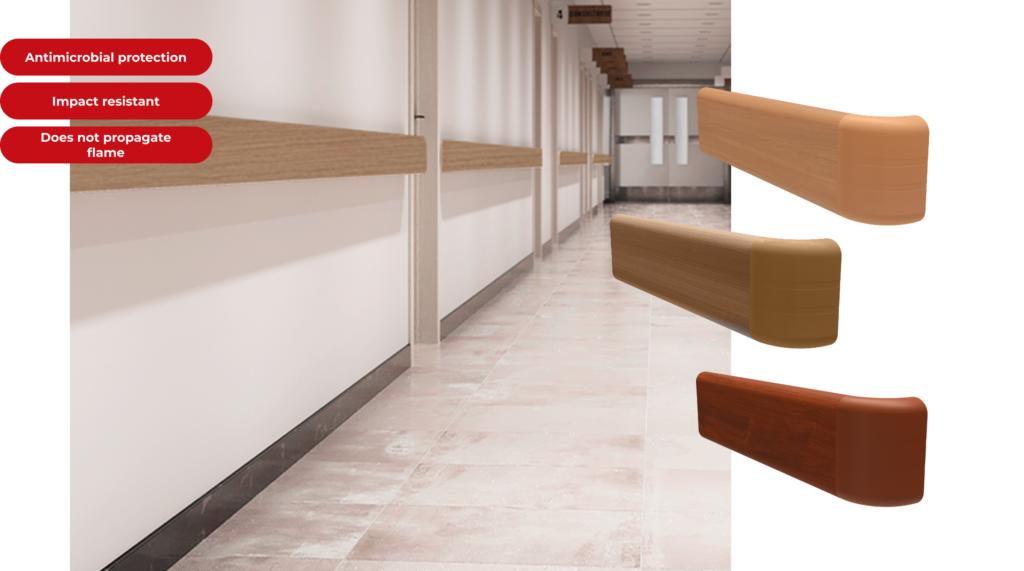
Tecnoperfil offers different color and finish options to make it easier to integrate its solutions into the project. The Nature line, for example, features wood-look finishes that expand design possibilities in spaces seeking a warmer, more welcoming aesthetic.
To better understand how this type of finish combines protection and aesthetics, check out our article: Wood-Look Wall Protector: Protection, Sophistication and Comfort.
5 - Technical requirements
Not all of a profile’s requirements are visible. Depending on the segment, the project may require resistance to certain chemicals, performance under specific conditions or compliance with standards and certifications.
Dimensions also affect performance. Geometry, fit and measurements must match the project to ensure compatibility and proper functioning of the profile.
Therefore, in projects with specific technical requirements, it is important to evaluate the profile’s characteristics and confirm its compatibility with the conditions of use.
Applying the criteria: examples by need
Corner protection with PVC corner guards
To protect the corners of walls, doors, partitions, cladding and other structures, corner guards offer a range of application possibilities.
Tecnoperfil offers rigid, flexible, POP, surface-mounted, chamfered and multi-angle models. The choice should take into account flange size, the shape and angle of the corner, impact intensity, the need for flexibility, the fastening method and the finish.
Model | Angle/geometry | Flexibility | Recommended use |
Rigid | Straight corner (90°) | Low | Standard corners |
Flexible | Adaptable | High | Irregular surfaces |
Multi-angle | 115° to 135° | High | Non-standard angles |
POP | Standard | Medium | General use |
Surface-mounted | — | — | Installation over existing cladding |
For standard corners, a rigid corner guard may be enough. Surfaces with specific geometries, on the other hand, may require more adaptable solutions. The TEC 553, for example, adapts to angles between 115° and 135°.
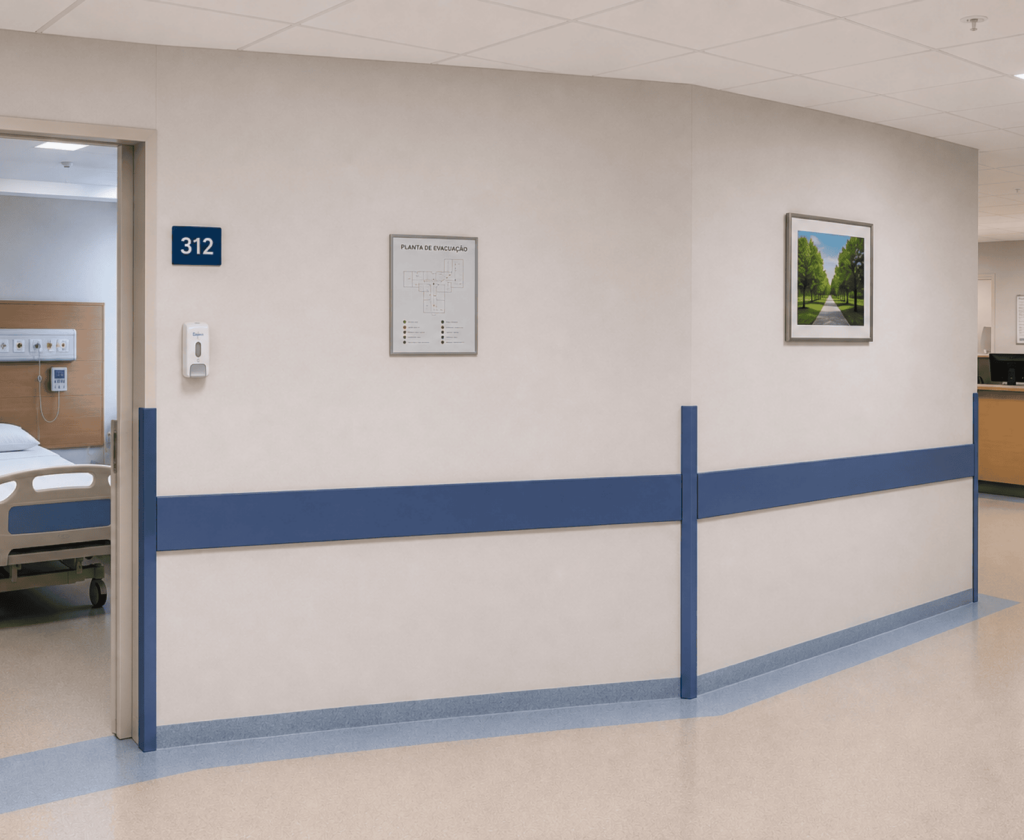
Wall protection with PVC profiles
In high-traffic environments, wall protectors help preserve surfaces against impacts and everyday wear. Hospitals, clinics, hotels, schools and commercial buildings, for example, are constantly exposed to contact with stretchers, carts, chairs, equipment and furniture.
When choosing a wall protector, consider the height of the area to be protected, impact intensity, traffic flow, wall length, cleaning requirements and finish.
Installation also affects the protector’s performance, especially in heavy-use applications. Learn more about installation and maintenance best practices in: How to Install a Wall Protector: Complete Installation and Maintenance Guide.
Beyond protection, these products can also contribute to the visual design of a space. The article Wall Protectors: Preservation and Aesthetics explores this relationship between protection and finish.
PVC profiles for healthcare environments
In healthcare environments, the choice needs to take protection, hygiene, functionality, safety and aesthetics into account. Beyond resistance, it is important to evaluate the frequency and type of cleaning, the flow of people and equipment, the protection of walls and corners, and how the elements of the space work together.
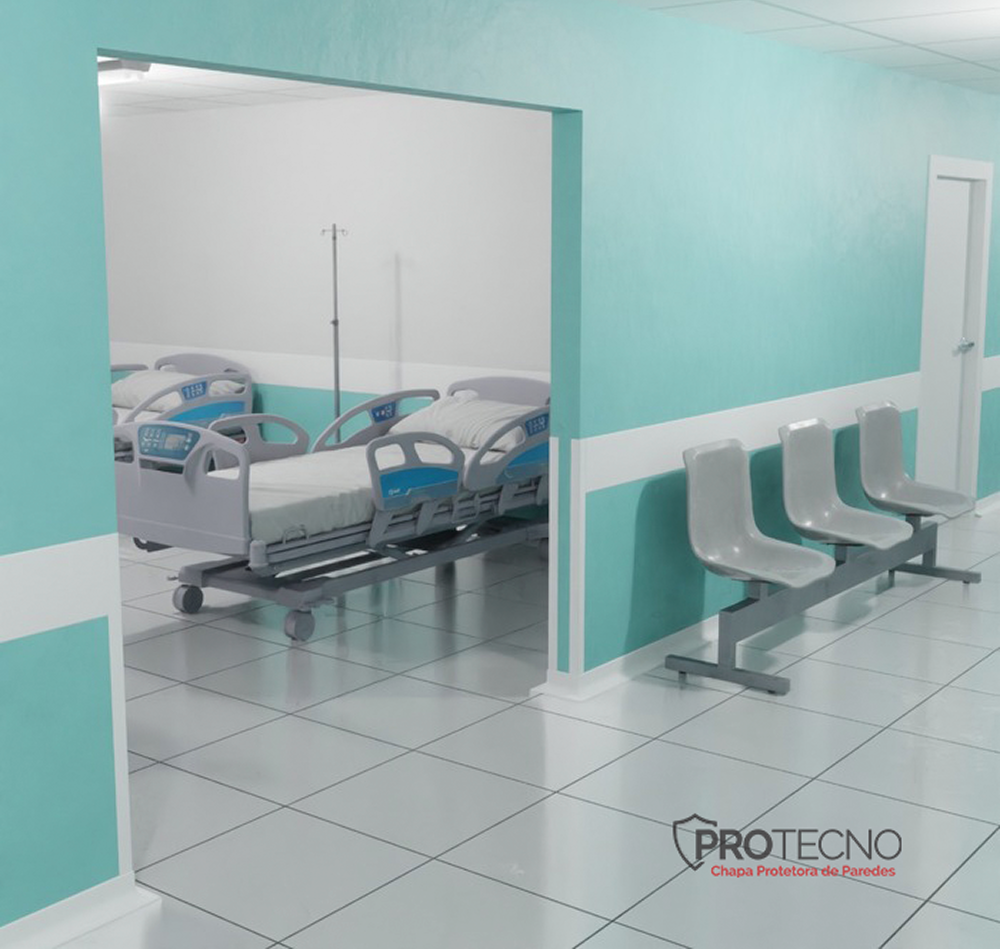
Tecnoperfil offers solutions for its healthcare line, such as wall protectors/bed bumper guards, protective wall sheets, corner guards, handrails, grab bars and baseboards. The availability of BIM files also helps professionals select and integrate products right from the design stage.
Product | Main function | Where it is typically applied |
Wall protector/bed bumper guard | Absorbs impacts from stretchers, carts and equipment at contact height, preventing wall damage | Corridors, elevators and heavy-traffic areas |
Protective wall sheet | Protects larger wall areas against impacts, friction and wear from constant use | Procedure rooms, corridors and high-traffic areas |
Corner guard | Protects corners and edges against impacts, preventing chipping and wear of paint or cladding | Corners of walls, doors and partitions |
Provides support and safety for patients and visitors as they move around | Corridors, ramps and stairs | |
Grab bar | Aids stability and mobility, especially during maneuvers and transfers | Restrooms, locker rooms and patient support areas |
Protects the base of the wall against moisture and cart impacts, and makes cleaning easier | The full length of corridors and circulation areas |
Read also:
Designing Healthcare Environments: How to Integrate Protection, Aesthetics and Functionality.
Anti-slip profiles for stairs and ramps
On stairs and ramps, the specification should consider both safety and finish. Anti-slip profiles can help improve traction on certain surfaces.
When defining the profile, evaluate the floor material and shape, foot traffic, environmental conditions, installation method and the frequency of cleaning and maintenance. The profile should meet the real characteristics of the application, not just aesthetic needs.
Learn about the main types, applications and considerations when choosing PVC anti-slip profiles.
PVC profiles for retail and points of sale
In retail, profiles contribute to the organization, identification, visual merchandising and operation of the point of sale. Label holders, rails for electronic shelf labels and checkout profiles are some of the solutions used in this segment.
When choosing the solution, it is important to consider visibility, ease of replacement, compatibility with equipment, dimensions, resistance to daily use, integration with fixtures and finish.
Learn more about the role of label holders in organizing the point of sale.
PVC profiles for refrigeration equipment
Profiles for refrigeration equipment have specific requirements. When choosing them, it is important to consider the equipment model, the profile’s function, dimensions, fit, the components involved, conditions of use and finish.
In technical applications, compatibility between components is essential to ensure the solution performs as intended.
PVC profiles for industrial applications
In industry, the choice of profile depends on the characteristics of the production process and the function it needs to perform, such as protection, organization, signage or integration with other components.
It is also important to consider exposure to chemicals, friction, impacts and temperature variations.
When is a custom profile the best option?
A catalog solution does not always fully meet the needs of a project. When there are specific requirements for shape, size, fit or integration with other components, developing a custom profile may be the most suitable alternative.
Tecnoperfil develops made-to-measure profiles based on the technical specifications of each application. Customization may be considered when the project requires:
- a specific shape or size;
- a proprietary fit;
- integration with another component or piece of equipment;
- standardization;
- technical characteristics not available in the catalog.
Before opting for customization, it is important to evaluate the available solutions.
Conventional applications can be met with catalog products, while projects with unique geometries, measurements or integrations may require custom development.
The goal is to meet the project’s requirements without compromising performance or adapting the application to a profile that was not designed for it.
How to define the profile’s dimensions?
Once the application is defined, it is important to evaluate the profile’s measurements. In technical projects, a few millimeters can make a difference in the fit and performance of the solution.
Dimension | What to evaluate |
Width and height | The area that needs to be covered or protected |
Thickness | Thickness of the materials involved, to ensure a proper fit |
Length | The length required to cover the entire installation |
Geometry | Whether the surface is straight, curved or has specific angles |
Fit / installation | How the profile will be fastened (surface-mounted, snap-fit, glued or screwed) |
This information helps ensure the profile is suited to the real characteristics of the project.
Checklist: how to choose the right PVC profile?
Before specifying or purchasing a profile, evaluate:
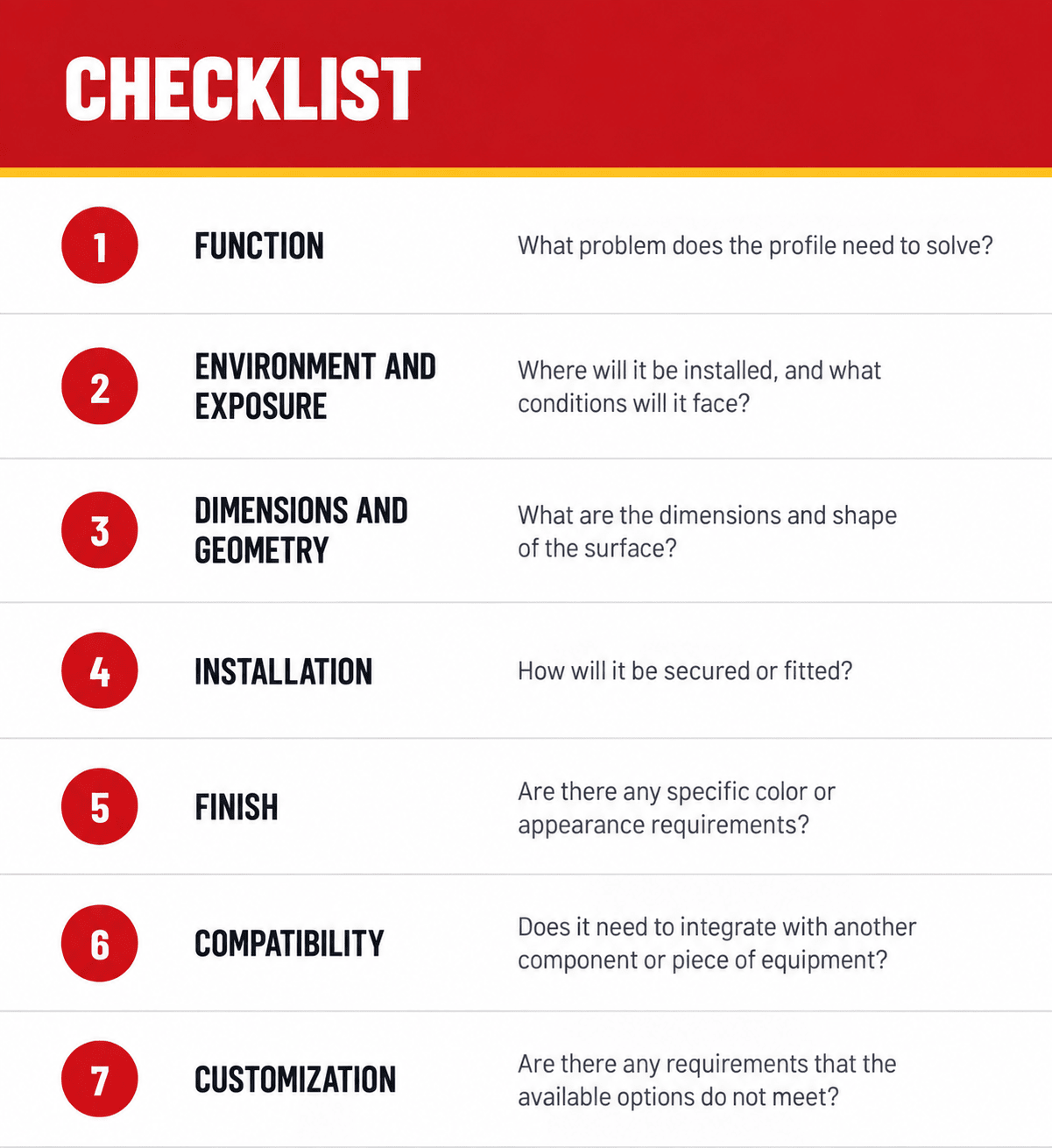
- Function: what problem does it need to solve?
- Environment and exposure: where will it be installed and what conditions will it face?
- Dimensions and geometry: what are the measurements and the shape of the surface?
- Installation: how will it be fastened or fitted?
- Finish: is there any specific color or appearance requirement?
- Compatibility: does it need to integrate with another component or piece of equipment?
- Customization: is there any requirement that the available options do not meet?
These criteria help make the choice more accurate. When the application requires characteristics that are not available in the catalog, it is worth seeking technical guidance.
So, what is the ideal PVC profile?
The ideal profile is the one that meets the function, environment and specific conditions of the application.
A corner may call for a corner guard, a wall exposed to impacts may need a wall protector, and refrigeration equipment may require a specific solution. When no catalog option meets the required measurements or characteristics, developing a custom profile can be an alternative.
Since 1994, Tecnoperfil has been developing PVC solutions for different segments, such as construction, industry, retail, healthcare, refrigeration and hydroponics, as well as custom profiles for projects that require made-to-measure solutions.
The best choice starts with the project’s needs.
Explore Tecnoperfil’s solutions and find the right option for your project.
Frequently asked questions
There is no single ideal PVC profile for every application. The choice depends on the function, environment, exposure level, dimensions, installation and technical requirements of the project.
No. Characteristics and applications vary from product to product. That is why you need to consider the specific conditions of the environment and the purpose of the profile.
Start by defining the product’s function. Then evaluate environment, exposure, dimensions, geometry, installation, finish and technical requirements.
Yes. There are PVC profiles designed specifically for healthcare environments. Tecnoperfil offers solutions for healthcare settings, such as wall protectors, bed bumper guards and corner guards, which contribute to the protection, safety and functionality of these spaces.
Yes. Tecnoperfil develops custom profiles according to the specifications of each project.
There are different types of PVC profiles, defined by their function and application. They include corner guards, wall protectors, anti-slip profiles, label holders, refrigeration profiles and custom profiles.
It is important to evaluate the corner size, angle, impact level, need for flexibility, environment, installation and finish. Tecnoperfil offers different models for different applications.
Yes. Tecnoperfil provides technical materials and a BIM library for selected products, helping professionals specify and integrate solutions into their projects.